Compensation and Damages for Serious Invasion of Privacy

Full court representation for civil privacy damages under Schedule 2 of the Privacy Act 1988 (Cth). No proof of financial loss required.

Book a Confidential Assessment ($770)

Max file size: 20MB

What the Statutory Tort Provides

The statutory tort for serious invasion of privacy, which commenced on 10 June 2025, gives individuals a direct right to sue for compensation in court. It is the first general civil privacy action in Australian law.

Actionable Without Proof of Damage

The tort is actionable per se. You do not need to prove financial loss, psychiatric injury, or any other form of damage. The invasion itself is the wrong. This distinguishes it from most other civil claims.

Damages Cap of $500,000

Non-economic loss (distress, humiliation, loss of dignity) is compensable up to the indexed cap, which rose to $500,000 on 1 July 2025. This cap mirrors the structure used in defamation law and is adjusted annually.

Exemplary Damages within the Cap

Where the defendant's conduct was deliberate, egregious, or calculated, the court may award exemplary damages. Under Clause 11, these punitive damages are included within the same statutory cap as non-economic loss.

Truth Is Not a Defence

Unlike defamation, it does not matter whether the information published about you was accurate. The wrong is the invasion of your privacy, not the falsity of any statement. True information disclosed without consent is fully actionable.

Broad Defendant Pool

You can bring a claim against any person, corporation, or government body. While narrow exemptions exist for journalists, these do not protect social media users or influencers. This is a significant advantage over the OAIC pathway.

Federal Jurisdiction, Australia-Wide

The statutory tort is Commonwealth legislation. Claims can be brought in the Federal Court of Australia or in state and territory courts exercising federal jurisdiction. We act for clients across all Australian states and territories.

How a Compensation Claim Works

The process from initial assessment through to court proceedings or settlement.

Solicitor providing a confidential initial assessment

Confidential Assessment of Your Claim

Every compensation claim begins with a thorough assessment of the facts. We offer a fixed-fee confidential initial assessment for $770, during which a solicitor reviews the circumstances, evaluates the seriousness threshold, and advises on the realistic range of compensation. We also distinguish between Part 3 exemptions (such as those for journalists or government agencies), which can often be determined early to resolve a matter, and Part 2 defences, which are typically determined at trial. Not every privacy complaint will sustain a court claim. The statutory tort requires the invasion to be intentional or reckless, and it must be serious. Negligent handling of information may be actionable through other channels such as an OAIC complaint but might not meet the threshold for this tort. In some cases, a pre-action demand letter at a fixed fee of $990 may resolve the matter without court proceedings.

Diagram of legal pathways and options for privacy cases

Two Pathways to Compensation

Schedule 2 of the Privacy Act 1988 (Cth) creates two distinct pathways. The first is intrusion upon seclusion: surveillance, tracking, hidden cameras, or physically intruding into a private space. This pathway does not require any publication or disclosure of information. The act of recording or intruding is itself actionable. The second pathway is misuse of personal information: collecting, using, or disclosing private information where the plaintiff had a reasonable expectation of privacy. This covers doxxing, publication of private health records, and non-consensual sharing of intimate images. Each pathway leads to the same remedies: damages for non-economic loss (up to the $500,000 cap), exemplary damages (also subject to the cap), an account of profits where the defendant profited, and injunctive relief. The court applies a balancing test under clause 7(1)(e), weighing your privacy interest against any countervailing public interest.
Visual representation of urgency in legal actions

Limitation Periods Are Strict

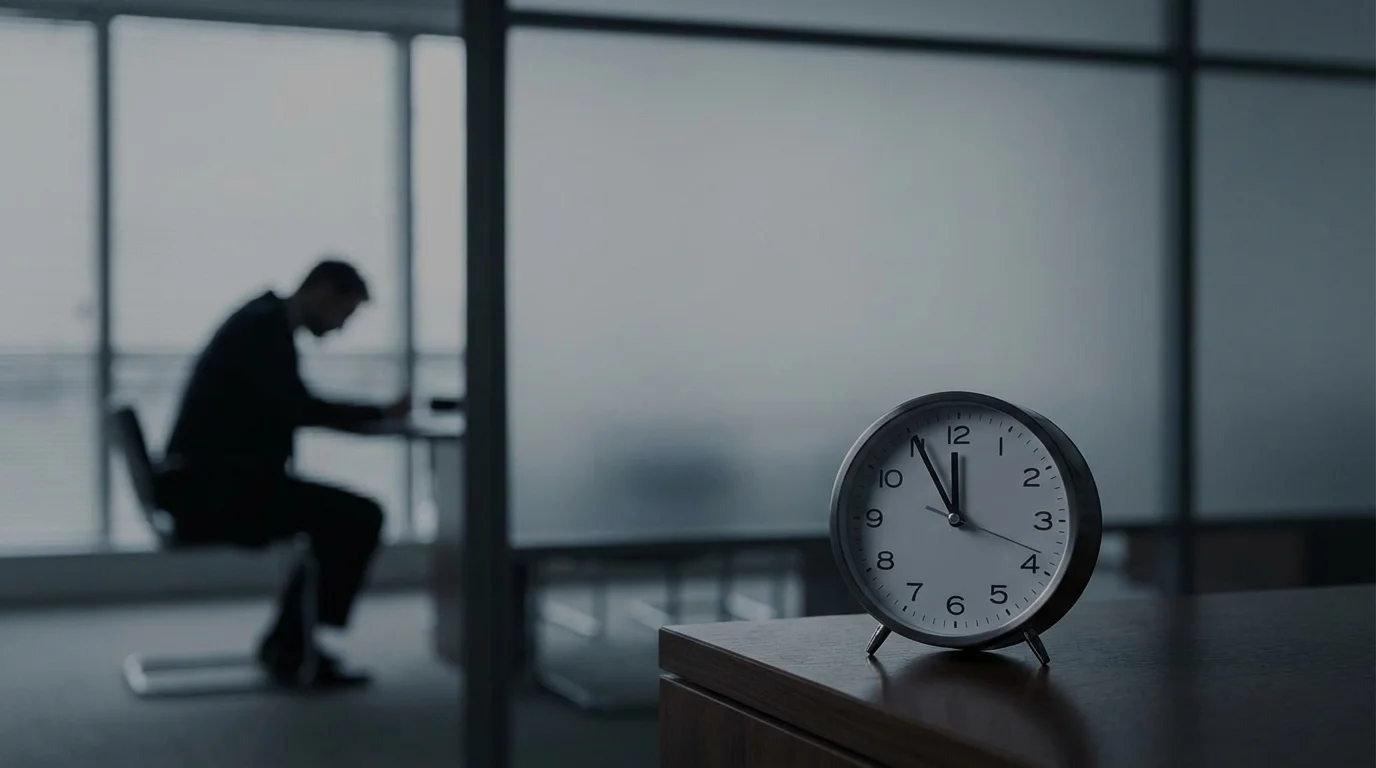
The clock is ticking. You may have as little as 12 months to act. Under the statutory tort, the limitation period is one year from the date you became aware (or ought reasonably to have become aware) of the invasion, or three years from the date the invasion occurred, whichever expires first. In limited circumstances, the court may extend the period up to a maximum of six years from the date of the invasion. These time limits are not generous. If you are aware that your privacy has been seriously invaded, you should obtain legal advice promptly. Delay can extinguish your right to claim compensation entirely, regardless of the strength of your underlying case. This is particularly important in matters involving ongoing surveillance or repeated disclosures, where the limitation period may run separately for each act of invasion. We offer urgent consultations for matters approaching the limitation deadline.

Urgent Privacy Injunctions

Urgent Privacy Injunctions

Where the invasion is ongoing or publication is imminent, an injunction may be the appropriate first step. Injunctive relief can be sought alongside or before a compensation claim.

Learn More

Pre-Action Demand Letters

Pre-Action Demand Letters

A formal letter before action can resolve many disputes without court proceedings. Fixed fee: $990. Often the most cost-effective starting point.

Learn More

Confidential Initial Assessments

Confidential Initial Assessments

A structured assessment of your claim by a solicitor. Fixed fee: $770. You receive a clear, written opinion on the merits of your matter and the available options.

Learn More

Surveillance and Recording Claims

Surveillance and Recording Claims

Claims arising from hidden cameras, covert audio recording, GPS tracking, phone monitoring, and other forms of surveillance. The tort fills gaps left by state legislation.

Learn More

Misuse of Private Information

Misuse of Private Information

Claims where private health records, financial information, personal correspondence, or other confidential material has been disclosed without consent.

Learn More

Intimate Images and Doxxing

Intimate Images and Doxxing

Non-consensual sharing of intimate images and the publication of identifying personal details online. The statutory tort provides a direct civil remedy.

Learn More

Frequently Asked Questions: Privacy Tort Compensation

The statutory tort caps non-economic loss (distress, humiliation, anxiety, and loss of dignity) at the same level as the defamation damages cap, which rose to $500,000 on 1 July 2025. This cap applies to both non-economic loss and exemplary damages combined. You do not need to prove financial loss to receive this compensation. The tort is actionable per se, meaning the invasion itself is the compensable wrong. In addition to non-economic loss, the court may award an account of profits where the defendant derived a financial benefit from the invasion. While the body of Australian case law on quantum is still emerging, courts are likely to look to UK, New Zealand, and Canadian privacy tort jurisprudence for guidance on assessment. For a detailed explanation of the damages framework, see our page on how much compensation for invasion of privacy.

No. The statutory tort for serious invasion of privacy is actionable per se. This means you can recover compensation for non-economic loss (distress, humiliation, loss of dignity, anxiety) without proving any financial or economic harm. This is a significant departure from most civil claims, which require proof of damage as an element of the cause of action. If you have also suffered financial loss as a consequence of the invasion, that may be recoverable as well, but it is not a prerequisite.

They are separate regimes with different scope and outcomes. The OAIC complaint pathway under the Australian Privacy Principles (Schedule 1 of the Privacy Act) is free, does not require a lawyer, and can result in a determination requiring the respondent to compensate you or change its practices. However, it only applies to APP entities (generally organisations with annual turnover above $3 million, health service providers, and Commonwealth agencies). It does not cover individuals, small businesses below the threshold, or most private conduct. Outcomes tend to be modest and the process is slow. The statutory tort under Schedule 2 allows you to sue any person, corporation, or government body in court, regardless of whether they are an APP entity. It provides for damages up to the statutory cap, exemplary damages, injunctions, and accounts of profits. It is the stronger avenue for serious invasions. For a full comparison, see OAIC complaint vs suing for invasion of privacy.

No. Truth is not a defence to a claim under the statutory tort for serious invasion of privacy. This is a fundamental difference between privacy law and defamation law. In defamation, a defendant can defeat your claim by proving the published material was substantially true. Under the privacy tort, the wrong is the invasion of your privacy, not the falsity of any statement. True information disclosed without your consent is fully actionable if the other elements of the tort are established. If the same conduct also damages your reputation, you may have overlapping claims in both privacy and defamation. See invasion of privacy vs defamation for an explanation of how the two causes of action interact.

Exemplary damages (sometimes called punitive damages) are an additional award intended to punish the defendant for particularly egregious, deliberate, or calculated conduct and to deter similar behaviour. Note that under Clause 11, exemplary damages are subject to the same statutory cap that applies to non-economic loss. The court has discretion to award exemplary damages where the circumstances warrant it. Factors likely to be relevant include whether the defendant acted with malice, whether the invasion was repeated or sustained, whether the defendant profited from the conduct, and whether the defendant disregarded warnings or legal demands to stop. Courts may draw on the approach taken in UK privacy tort cases and in Australian defamation law.

The limitation period is one year from the date you became aware (or ought reasonably to have become aware) of the invasion, or three years from the date the invasion occurred, whichever expires first. In limited circumstances, the court may extend time up to a maximum of six years from the date of the invasion. These are strict deadlines. If you miss the limitation period, your claim is likely to be statute-barred regardless of its merits. If you believe your privacy has been seriously invaded, you should seek legal advice promptly. See privacy tort time limits for further detail.

An apology by a defendant does not constitute an admission of fault or liability under clause 13 of Schedule 2. However, the court may take an apology (or the absence of one) into account when assessing the quantum of damages. In practice, this means a prompt and genuine apology may reduce the amount awarded, while a refusal to apologise or continued defiant conduct may increase it. This mirrors the approach taken in defamation law.

We offer a fixed-fee confidential initial assessment for $770, which provides you with a written opinion on the merits of your claim and the available options. A pre-action demand letter is available for a fixed fee of $990. If the matter proceeds to court, costs will depend on the complexity of the claim, the conduct of the defendant, and whether the matter resolves at an early stage or proceeds to trial. We provide clear costs estimates at each stage. The statutory tort allows the court to make costs orders, and a successful plaintiff will generally seek to recover a proportion of their legal costs from the defendant.

Yes. Where the same conduct gives rise to both a privacy claim and a defamation claim, you may have overlapping causes of action. For example, if someone publishes your private medical records and the publication also damages your reputation, you may have a claim under both the statutory tort and the Defamation Act 2005. The two claims have different elements, different defences, and different remedies. We practise in both areas. For matters that involve both privacy and defamation, see invasion of privacy vs defamation or visit defamationlawyer.au.

The statutory tort is a relatively recent addition to the Australian legal system. As a result, reported decisions on its application are limited. Significant questions about how courts will interpret the seriousness threshold and apply the public interest balancing test are still being explored. Australian courts may consider overseas privacy tort jurisprudence from the United Kingdom, New Zealand, and Canada as persuasive authority. We monitor developments in this area closely to advise clients on the current state of the law.
Call